
The Guide to End-of-Summer Upholstery Recovery and Upholstery Cleaning
Summer in New Hampshire and Vermont means lake season. Homes around Lake Sunapee, Mascoma Lake, and the Connecticut River see a massive influx of family, friends, and vacationers. While heavy hosting creates great memories, it also subjects the interior of a lake house to severe environmental wear and tear. By late August, living room furniture often bears the brunt of this continuous activity.
The combination of wet swimsuits, beach sand, and aerosolized sunscreens transforms soft furnishings into sticky, gritty catch-alls. Understanding how these specific summer soils interact with fabric is the first step in safely restoring your home's interior. For property owners searching for upholstery cleaning near me NH, knowing the science behind oil extraction and fiber care is necessary to protect expensive furniture from permanent degradation as the summer season ends.
The Chemistry of Summer Soil: Sunscreen and Insect Repellent
The most damaging contaminants introduced to a lake house during the summer are not physical dirt, but chemical oils. Sunscreens and insect repellents are scientifically engineered to be waterproof and to adhere tightly to human skin. When a guest sits on a couch while wearing these products, those same chemical barriers transfer directly onto the upholstery fibers.
Once embedded in the fabric, these oils create a persistent, sticky residue. Unlike standard indoor dust, which sits loosely on the surface, these oil-based compounds physically bond with the threads of the furniture. This sticky film acts as an aggressive magnet for other contaminants. Every time a draft blows through an open window or a pet brushes past the sofa, loose environmental dust adheres to the oily spots, causing the fabric to darken and look heavily soiled in a matter of weeks.
Furthermore, human sweat introduces a slightly acidic moisture into the cushions. When sweat mixes with the trapped body oils and chemical lotions, it creates an ideal environment for biological growth deep within the foam of the couch. This biological activity is the primary source of the stale, heavy odors often noticed in living rooms at the end of August.

The Abrasive Threat: Sand and Lake Silt
While oils degrade the visual appearance of furniture, physical particulates threaten the structural integrity of the fabric itself. Constant movement between the dock, the beach, and the living room inevitably tracks fine sand and lake silt indoors.
When people sit on upholstered furniture, their body weight compresses the cushions, forcing this microscopic sand deep into the weave of the fabric and down into the primary backing of the piece. Sand is composed of jagged, irregular microscopic edges. When trapped inside a couch cushion, this grit functions exactly like sandpaper.
Every time someone sits down, shifts their weight, or gets up, the sand grinds against the soft cotton, linen, or synthetic fibers of the upholstery. Over a single busy summer, this constant microscopic abrasion can cut the threads and cause the fabric to fray, thin out, or lose its structural tension. Removing this deep-set grit is crucial for preventing premature wear and extending the lifespan of the furniture.
Why Household Cleaners Fail on Heavy Oils
When confronted with a sticky, darkened armrest, the immediate instinct is often to use a store-bought fabric spray or a mild dish soap solution. However, applying standard household cleaners to heavy summer oils typically makes the problem worse.
Most over-the-counter fabric sprays are not designed to break down waterproof sunscreens or heavy insect repellents. Instead, they act as masking agents, covering the soiled area in synthetic perfumes. If a soapy solution is used without a proper extraction method, the soap simply smears the oily residue deeper into the cushion. More importantly, household cleaning leaves behind its own soapy residue because there is no powerful vacuum to extract the liquid.
This dried soap is highly alkaline and naturally sticky. Within days of a DIY cleaning attempt, the soapy spot will attract new dirt even faster than the original oil stain, creating a frustrating cycle of rapid re-soiling. Breaking down these waterproof compounds requires precise chemical formulations that match the pH of the specific fabric.
Evaluating Upholstery Cleaning Near Me NH: The Hot Water Extraction Method
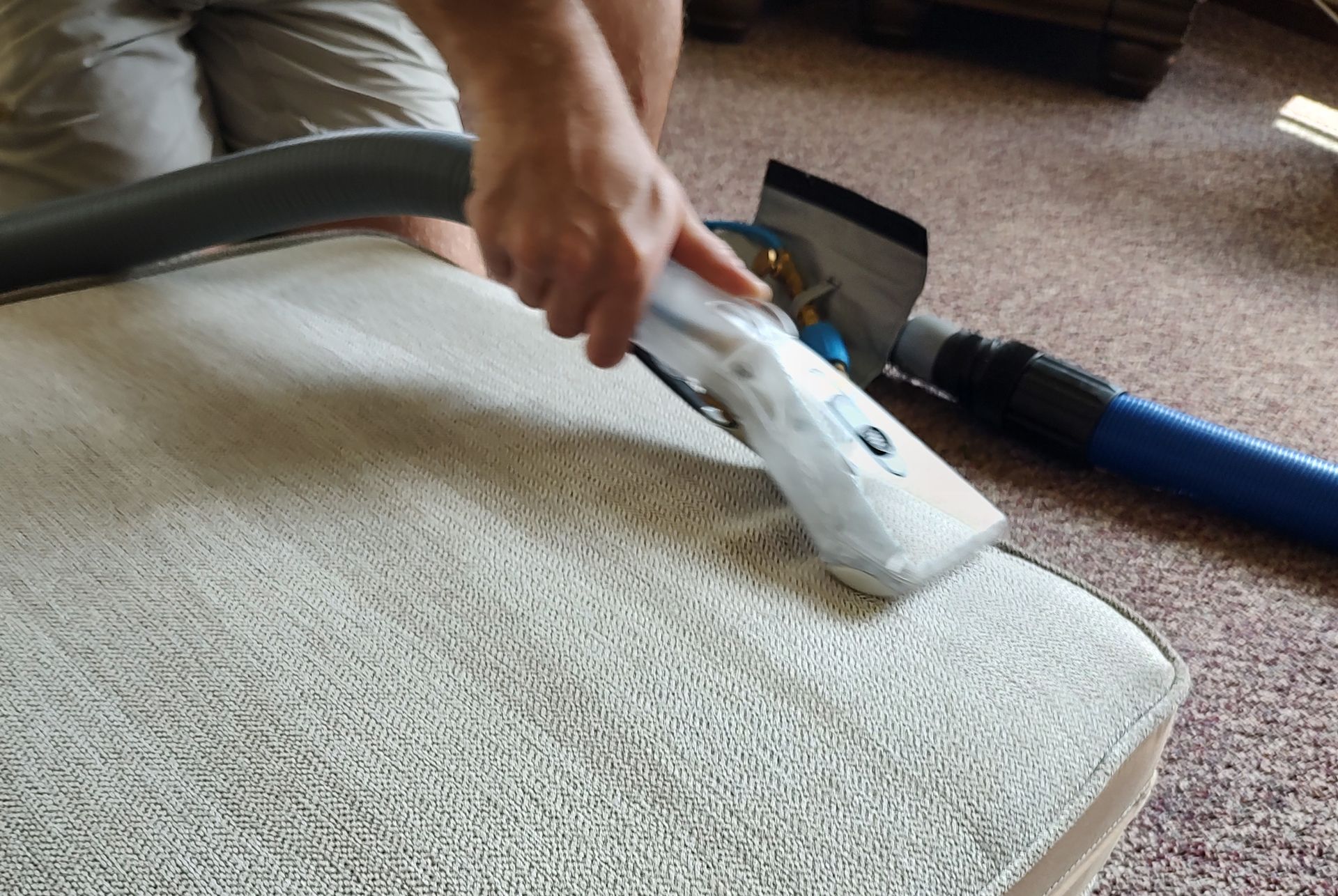
To safely remove embedded summer soils, the physical contaminants must be flushed entirely out of the furniture. The professional standard for this level of restoration is hot water extraction, commonly referred to as deep steam cleaning.
The process begins with an assessment of the fabric to determine its material composition, whether it is a natural cotton blend or a durable synthetic microfiber. A targeted, low-moisture pre-spray is then applied to the upholstery. This specialized solution is formulated specifically to break the chemical bonds of heavy body oils, sunscreens, and insect repellents, allowing them to release their grip on the fibers.
Following the pre-treatment, a technician uses a specialized hand tool to inject heated water into the fabric while simultaneously extracting it with an industrial-grade vacuum. The thermal energy from the water melts the loosened oils, while the powerful suction removes the water, the chemical residue, and the abrasive sand trapped deep in the cushions. Scheduling professional upholstery cleaning ensures this physical extraction is performed safely, resetting the fabric without risking shrinkage or watermarks.
Preparing Your Lake Property for the Off-Season
For property investors and second-home owners, the end of the summer rush marks a critical maintenance window. Leaving sticky sunscreens and damp lake odors sitting in the furniture over the winter allows the soils to oxidize and set permanently.
A proactive end-of-summer reset protects the interior assets of the home before it is closed up for the winter or transitioned to autumn guests. Removing the heavy biological load from the furniture not only restores the visual appeal of the room but drastically improves the indoor air quality by extracting the dust and dander trapped during the busy season.
For those managing short-term rentals, ensuring the property maintains a five-star standard is essential. Whether coordinating a comprehensive house cleaning or utilizing dedicated Airbnb cleaning services, deep extraction guarantees that the heavy wear and tear of July and August does not negatively impact the experience of guests arriving for the highly competitive fall foliage season.
Frequently Asked Questions
Why does my couch feel sticky after the summer?
The sticky texture on your furniture is likely the accumulation of aerosolized sunscreens, insect repellents, and natural body oils. These products are scientifically designed to be waterproof and to adhere tightly to surfaces. When transferred to your couch, they bond with the fabric fibers.
This oily film cannot be removed by dry vacuuming. It requires a specialized, pH-balanced cleaning agent to break the chemical bond, followed by hot water extraction to physically wash the sticky residue out of the material.
Can I use a rented carpet cleaner to wash my upholstery?
Using consumer-grade rental machines on upholstery carries a significant risk of damage. These rental machines generally lack the necessary vacuum lift required to extract the high volume of water they inject into the fabric.
When upholstery foam is left saturated with water, it can take several days to dry completely. This prolonged dampness creates the perfect dark, wet environment for mold and mildew to develop deep inside the cushions, often resulting in a permanent musty odor.
How does sand damage furniture fabric?
Sand and lake silt are composed of microscopic, jagged rock particles. When this grit falls past the surface of the fabric and settles deep into the weave or the backing of the couch, it acts as a harsh abrasive.
Every time weight is applied to the cushion, the sand grinds against the threads of the upholstery. Over time, this constant friction cuts the fibers, leading to frayed spots, thinning fabric, and the premature structural failure of the furniture.
How long does furniture take to dry after professional extraction?
Professional hot water extraction utilizes powerful truck-mounted or commercial-grade vacuum systems. These industrial systems extract the vast majority of the moisture immediately during the cleaning pass, leaving the fabric only slightly damp to the touch.
In a well-ventilated room with standard air circulation from ceiling fans or an HVAC system, most professionally cleaned upholstery will dry completely within four to six hours.
Will steam cleaning remove water spots from wet swimsuits?
Yes, hot water extraction is highly effective at removing water rings left behind by wet bathing suits or spilled drinks. These rings are often caused by "cellulosic browning," a reaction that occurs when natural fibers get wet and dry slowly, or when existing dirt is pushed to the outer edge of a wet spot.
A professional technician can apply a targeted neutralizing rinse during the extraction process. This corrects the pH balance of the fabric and flushes out the concentrated dirt rings, restoring an even, uniform appearance to the cushion.
Conclusion
The end of the summer lake season requires a deliberate approach to interior property maintenance. The accumulation of waterproof sunscreens, heavy body oils, and abrasive sand creates a hostile environment that accelerates the deterioration of expensive soft furnishings. Standard vacuuming and over-the-counter sprays are mechanically and chemically insufficient to address these complex soils. By prioritizing hot water extraction, property owners can permanently flush out these damaging contaminants. Understanding the value of an upholstery cleaning near me NH search allows you to connect with the right scientific methods to protect your investments, ensuring your lake house remains fresh, comfortable, and structurally sound for seasons to come.
For readers seeking additional information or professional support on this topic, Flanders Cleaning Services offers residential and commercial cleaning services in the Upper Valley region of New Hampshire and Vermont. Learn more at https://www.flanderscleaning.com/.