
Tackling Lakeside Humidity: A Guide to Enfield NH Carpet Cleaning Services
Summer in the Upper Valley introduces heavy recreational activity along Mascoma Lake. Property owners in Enfield, New Hampshire, face a highly specific environmental challenge during this peak season: persistent indoor humidity. Lakefront homes naturally absorb atmospheric moisture. The constant transition between the shoreline and the living room introduces wet sand, lake water, and damp beach towels directly onto interior flooring.
This combination of moisture and organic soil creates the perfect environment for musty odors to develop deep within carpet fibers. Understanding how moisture interacts with soft flooring is the first step in preserving these materials and maintaining a healthy indoor space. Standard household tools lack the mechanical power to reverse heavy seasonal dampness. Utilizing professional Enfield NH Carpet Cleaning Services provides the physical extraction necessary to neutralize odors, remove abrasive grit, and protect a home's air quality throughout the summer peak
The Physics of Lakeside Humidity and Carpet Fibers
The geography surrounding Mascoma Lake creates a localized microclimate. During the summer months, the air holds a significant amount of water vapor. This atmospheric moisture constantly interacts with the materials inside a home.
Carpets and area rugs are naturally hygroscopic. This means the fibers, particularly natural materials like wool and common synthetics like nylon, actively absorb moisture directly from the humid air. When the indoor relative humidity rises above sixty percent, a carpet essentially acts as a massive sponge spread across the floor. The fibers draw in the dampness, holding it deep within the pile and the primary backing of the rug.
This moisture absorption is especially problematic on lower levels or in shaded rooms facing the lake. As warm, humid air enters a cooler room, it loses its ability to hold water vapor. The moisture condenses directly into the base of the carpet resting on the cooler floor. This continuous condensation creates a permanently damp zone at the foundation of the room, setting the stage for structural wear and persistent odor issues.

The Odor Equation: Moisture, Sand, and Organic Soil
Moisture alone does not cause a musty smell. Odor development is a biological process that requires both water and a food source. In a lakefront home, the carpet provides an abundance of organic food sources.
Standard household dust contains dead skin cells and pet dander. Summer activities introduce additional organic matter, including microscopic bacteria from lake water and chemical oils from sunscreens. When damp beach towels, wet swimsuits, or water shoes are left resting on the floor, the moisture transfers directly into the carpet pad. This creates a dark, wet environment. Microscopic biological growth quickly begins to consume the organic soil trapped in the fibers.
As this biological matter breaks down the trapped soil, it releases volatile organic compounds (VOCs). These off-gassing VOCs are the exact source of the stale, musty scent noticeable when walking into a humid room. Furthermore, the constant foot traffic from the shoreline introduces fine silica sand. This sand acts as a harsh physical abrasive. When trapped inside a damp carpet, the wet grit functions like microscopic sandpaper. It adheres tightly to the fibers. Every time a person walks across the room.
Why Standard Vacuuming Fails Against Summer Moisture
When faced with a musty odor or a sandy floor, the immediate reaction is often to use a household vacuum cleaner. Vacuuming is a strictly mechanical process designed for dry environments. It is highly effective at removing loose, dry particulate matter from the top of the carpet pile.
When summer humidity turns the dust and oils in a carpet into a slightly damp, sticky residue, the physical bond between the soil and the carpet fiber becomes stronger than the airflow of a household appliance. The vacuum simply brushes over the top of the embedded dirt.
Additionally, most consumer-grade vacuums lack sealed high-efficiency particulate air (HEPA) filtration. As the machine suctions up the microscopic biological spores causing the odor, they pass straight through the standard paper or foam filter. The vacuum then exhausts these particles directly back into the breathing zone of the room. This process temporarily degrades the indoor air quality and spreads the musty scent more evenly throughout the building. For property owners concerned with airborne irritants, investing in Professional Cleaning for Allergies & Air Quality ensures that these biological contaminants are physically contained and removed rather than redistributed.
The Science of Enfield NH Carpet Cleaning Services and Hot Water Extraction
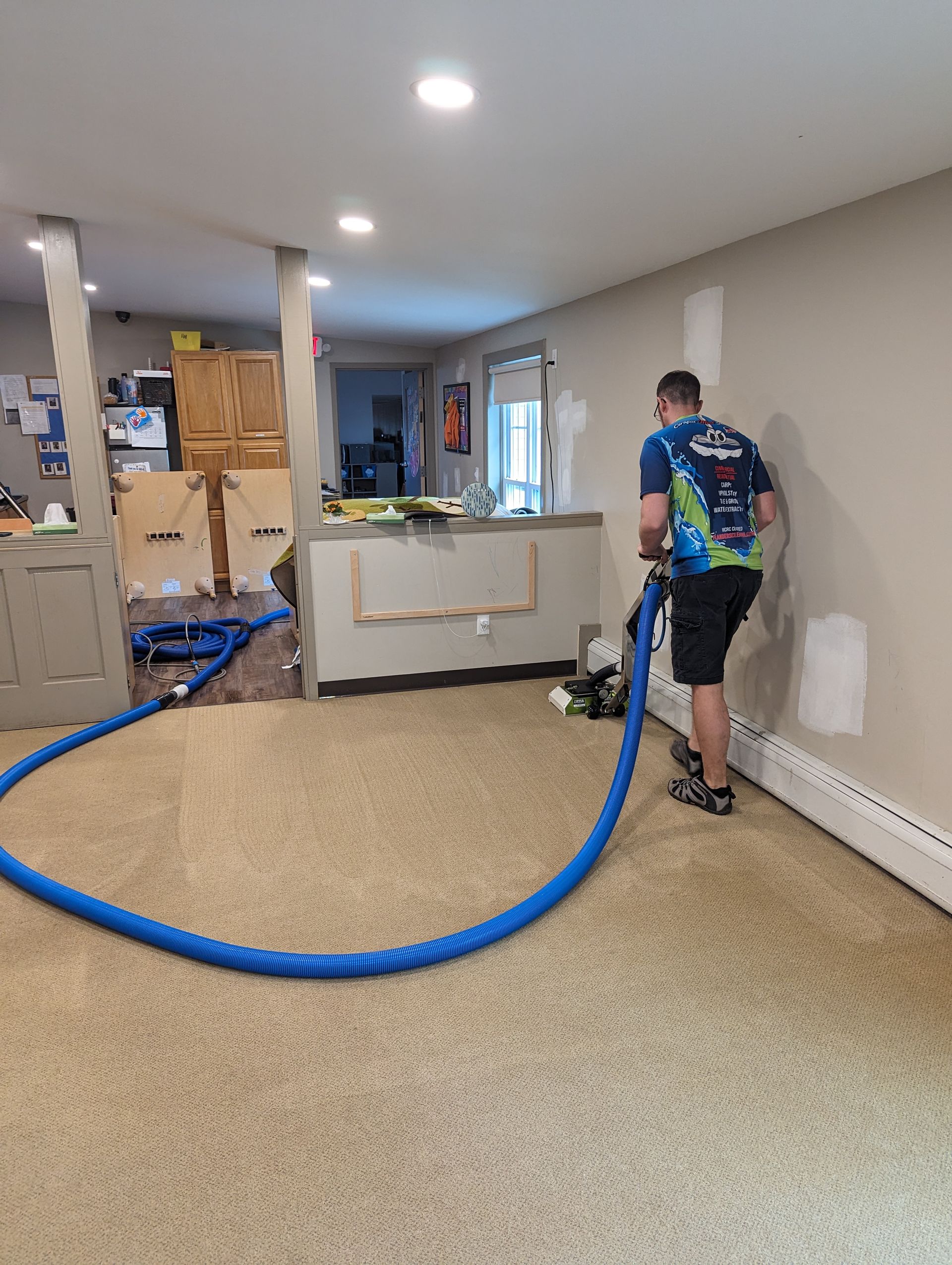
To permanently remove musty odors and abrasive lake sand, the physical soil must be flushed entirely out of the building. The professional standard for this level of restoration is hot water extraction, commonly referred to as deep steam cleaning. This method relies on precise scientific principles rather than harsh chemicals to sanitize a space.
The process begins with the application of a specialized, low-moisture pre-spray. This solution is carefully formulated to break the chemical bonds holding heavy body oils, sunscreen residues, and sticky summer soils to the fibers. Once the surface tension is broken, technicians utilize industrial-grade extraction equipment.
The intense thermal energy instantly melts the sticky residue and neutralizes the biological matter causing the odors. Simultaneously, a powerful vacuum extracts the hot water, the dissolved organic soils, and the heavy lake sand into a secure waste tank. Engaging specialized Enfield, NH Carpet Cleaning Services guarantees that this extraction is performed safely. The process resets the pH balance of the fibers, leaving the floor soft and structurally sound.
Timing Your Extraction for Maximum Asset Protection
Managing a property near Mascoma Lake requires proactive scheduling. Waiting to clean until a room already smells strongly of mildew means the biological growth is well-established within the carpet backing.
The most effective strategy is to perform a thorough extraction in early summer, just as the regional humidity begins its sharp upward climb. Extracting the accumulated dirt and soil from the spring mud season removes the primary organic food source before the peak moisture arrives. A clean carpet absorbs far less moisture and supports far less biological activity than a dirty one.
For homes that experience heavy hosting or short-term rental activity throughout July and August, a secondary recovery clean at the end of the season is highly recommended. Establishing a reliable deep cleaning schedule ensures that the abrasive sand and damp odors are flushed out before the house is closed up for the colder months. This proactive timeline protects your flooring investments year-round.
Frequently Asked Questions
Why do my carpets smell musty even after I vacuum?
Musty smells are the direct result of biological matter breaking down organic soils, like skin cells and oils, trapped in the fabric. This biological process requires moisture to thrive.
Standard vacuuming only removes dry, loose dirt from the surface of the carpet. It cannot pull out the trapped moisture, nor can it break the sticky bond of the organic oils feeding the biological growth. Because the root cause of the odor remains embedded in the damp carpet pad, the musty smell continues to off-gas into the room.
Can I use a rental machine to remove lake water smells?
Using consumer-grade rental machines often worsens odor problems during the humid summer months. These machines generally lack the necessary vacuum lift required to extract the high volume of water they inject into the carpet.
When a carpet is left saturated with water in a humid environment, it can take several days to dry. This prolonged dampness creates the perfect dark, wet environment for mold and mildew to develop deep inside the padding. Furthermore, rental machines often leave behind a sticky detergent residue that rapidly attracts new dirt.
How long does carpet take to dry during the humid summer months?
Professional hot water extraction utilizes powerful truck-mounted or commercial-grade vacuum systems. These industrial systems extract the vast majority of the moisture immediately during the cleaning pass, leaving the carpet only slightly damp to the touch.
In a well-ventilated home with ceiling fans running or the air conditioning turned on to manage ambient humidity, most professionally cleaned carpets will dry completely within four to six hours. This rapid drying window prevents any new musty odors from developing.
Will hot water extraction remove the sand trapped in my carpet?
Yes. Sand and lake silt are heavy, microscopic rock particles that fall deep into the primary backing of the carpet. Standard vacuums do not have the airflow required to pull this heavy grit upward through the dense fibers.
Hot water extraction suspends the sand within the injected hot water. The industrial vacuum then instantly pulls the water and the suspended heavy grit out of the carpet base. Removing this abrasive material is critical to prevent it from cutting the carpet fibers and causing premature wear.
Does opening windows help dry out damp carpets?
Opening windows is only helpful if the air outside is significantly cooler and drier than the air inside. In the Upper Valley, summer days are frequently accompanied by high relative humidity.
If you open windows on a humid day, you are actively inviting more moisture into the home, which the carpets will immediately absorb. To effectively dry a damp environment or speed up drying times after a professional cleaning, it is far more effective to keep windows closed and run a properly sized dehumidifier or an air conditioning system to physically remove moisture from the indoor air.
Conclusion
Managing a lakefront property requires addressing the constant influx of outdoor elements. The combination of Mascoma Lake humidity, wet beach gear, and tracked-in sand creates a harsh environment for interior flooring. Relying on dry vacuums or chemical sprays only masks the symptoms while allowing abrasive grit and biological odors to degrade the fibers over time. By prioritizing physical extraction, property owners can permanently flush out these damaging contaminants. Utilizing professional Enfield NH Carpet Cleaning Services is the most effective way to neutralize summer moisture, protect your indoor air quality, and ensure your home remains a clean, welcoming retreat all season long.
For readers looking for additional information or professional support related to this topic, Flanders Cleaning Services provides residential and commercial cleaning services in the Upper Valley region of New Hampshire and Vermont. Learn more at https://www.flanderscleaning.com/.