
Securing Your Deposit: Move-Out Carpet Restoration and Pinewood Village NH Carpet Cleaning Services
Moving out of a rental property in Pinewood Village represents a complex operational transition. For residents, students, and families preparing to relocate, the final lease obligation often carries high financial stakes. A significant portion of this transition involves the final move-out inspection, where property managers evaluate the physical condition of the unit before releasing the security deposit. Soft flooring, specifically wall-to-wall carpeting, is often the most scrutinized element of these property walkthroughs.
Failing to meet strict lease standards can lead to substantial financial deductions for cleaning and replacement. Understanding the mechanics of soil accumulation and the limitations of domestic cleaning methods is essential for protecting your rental investment. Utilizing professional Pinewood Village NH Carpet Cleaning Services provides the physical extraction and fiber restoration necessary to secure a full return of your deposit. This guide explains how move-out inspections assess flooring and why technical restoration is the only reliable pathway to a successful walkthrough.
The Financial Stakes of Move-Out Inspections and Pinewood Village NH Carpet Cleaning Services
Move-out inspections in Pinewood Village are rigorous reviews designed to return rental units to a clean baseline. Inspectors examine carpets closely for visual soils, traffic lane discoloration, and pet dander. When property managers identify permanent stains or heavy wear, they frequently charge departing tenants for the cost of deep extraction or complete carpet replacement.
Many lease agreements contractually require professional carpet cleaning upon move-out. Simply vacuuming before turning in keys is insufficient because it leaves deep contaminants in place. Following a detailed moving-out cleaning checklist helps organize these final responsibilities, protecting you from non-negotiable restoration fees assessed by management.
Understanding the Physics of Embedded Carpet Soil
Carpet fibers act as a massive environmental filter, trapping dry dirt, dust, and outdoor soils. Throughout a tenancy, carpets absorb numerous contaminants, including calcium chloride road salts during the winter, and fine clay silt, sand, and pollen in the spring and summer.
This grit does not remain on the surface. Gravity and daily foot traffic push these abrasive particles deep into the primary carpet backing. Once sand and salt settle at the base, they act like microscopic glass shards. Every footstep grinds these sharp crystals against the yarn, creating micro-abrasions that cause carpets to look permanently thin and worn.
Furthermore, carpets absorb airborne moisture, cooking grease, and pet dander. This organic material creates a sticky film that bonds dirt to the fibers. Standard vacuuming lacks the mechanical energy and moisture needed to break this bond, leaving the embedded soil untouched at the base of the floor.
Why DIY Carpet Rentals and Retail Shampoos Risk Your Security Deposit
Faced with a move-out deadline, many tenants attempt to resolve carpet issues themselves by using rented shampoo machines or retail cleaning products. While these consumer-grade options are widely marketed, they frequently cause mechanical and chemical issues that lead to failed property inspections.
The primary failure point of consumer carpet rentals is inadequate vacuum lift. These light machines utilize small electric motors that lack the suction power required to recover water from the dense carpet backing and pad. As a result, the carpet is left over-saturated with moisture. When carpet padding remains damp for more than twenty-four hours in a closed room, it creates an ideal dark, humid environment for mold and mildew to develop, resulting in a permanent musty smell that guarantees a failed walkthrough.
Chemically, retail shampoos rely on heavy, high-alkaline detergents to compensate for their lack of water temperature. Because consumer machines cannot fully extract the liquid, a significant amount of this soap dries directly onto the carpet fibers. This dried detergent remains highly sticky. When the tenant walks across the dry carpet, the soapy residue actively attracts dirt from their shoes, causing dark, dirty traffic lanes to reappear within days. To avoid these common DIY pitfalls, investing in professional carpet cleaning is the only way to ensure the soil is safely and permanently extracted.
The Professional Standard: How Hot Water Extraction Safely Restores Fibers
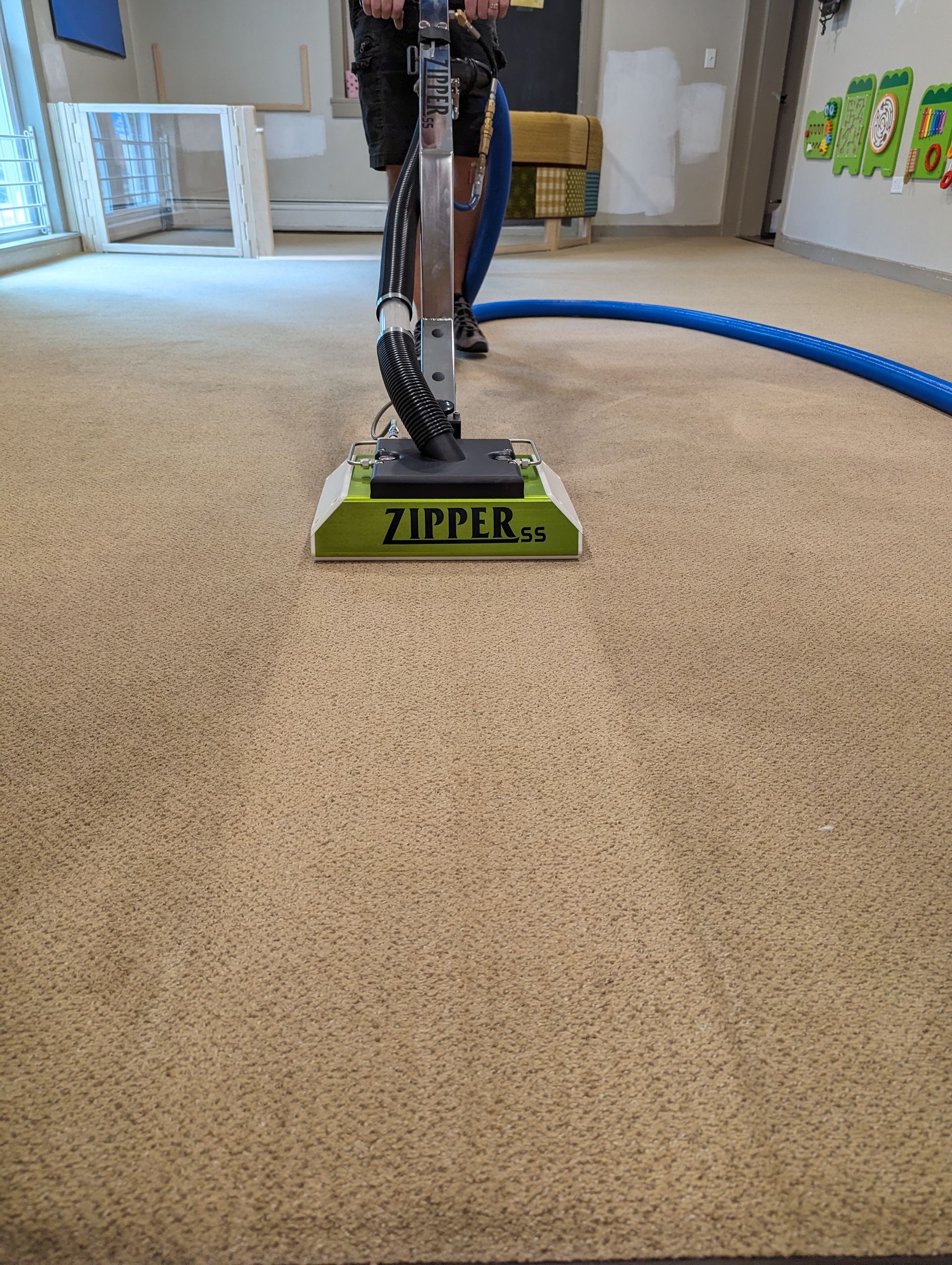
Safely restoring a carpet to its original condition requires breaking the chemical bond of the sticky residues and physically flushing the abrasive grit out of the building. We achieve this through hot water extraction, commonly referred to as deep steam cleaning. This technical process relies on precise heat, specialized chemistry, and high-volume extraction.
The restoration begins with the application of a specialized, low-moisture pre-treatment. This solution is formulated to match the specific fiber type of the carpet, liquefying tracked-in oils, food spills, and winter salt residues. Once the soils are suspended, professional technicians use truck-mounted or high-powered commercial extraction units.
These industrial systems inject heated water into the carpet pile at temperatures exceeding two hundred degrees Fahrenheit. This extreme thermal energy sanitizes the carpet on contact, neutralizing organic allergens and eliminating the biological sources of household odors. Simultaneously, the immense suction power of the commercial vacuum pulls the water, dissolved oils, and heavy sand out of the carpet pad and into a secure waste tank. This process leaves the carpet fibers completely clean, pH-balanced, and free of sticky soap residues, drying in just a few hours.

Establishing a Strategic Moving-Out Cleaning Timeline
The success of carpet restoration depends heavily on proper scheduling. Carpet cleaning must be the absolute final step in your move-out process to prevent re-contamination.
Homeowners and tenants should schedule their professional floor cleaning for the day after all furniture, boxes, and personal items have been completely removed from the apartment or house. Attempting to clean around heavy tables or beds is inefficient and leaves behind dusty patches. Furthermore, moving heavy items across a damp carpet will immediately track fresh dirt onto the clean fibers.
The building should be entirely empty. This provides the technicians with clear, unobstructed access to every square foot of the flooring, including closets and entryways. Once the hot water extraction is complete, the unit should remain empty and undisturbed with the heating or ventilation system running to ensure rapid drying. Coordinating this sequence guarantees that the property coordinator steps onto a spotless, fresh-smelling carpet during the final walkthrough, securing your deposit return.
Frequently Asked Questions
How long does the carpet take to dry after professional extraction?
Professional hot water extraction utilizes powerful commercial vacuum systems that recover over ninety percent of the water injected into the carpet. This leaves the flooring only slightly damp to the touch. In an empty, well-ventilated room with standard heating or air conditioning running, the carpet will typically dry completely within four to six hours.
Will professional carpet cleaning remove pet odors and urine stains?
Yes. Professional technicians use targeted bio-enzymatic pre-treatments and sub-surface extraction tools specifically designed to neutralize organic proteins and salts from pet accidents. Unlike domestic masking sprays, this physical extraction pulls the contaminants completely out of the carpet pad, permanently removing the odor source and preventing stains from returning as the floor dries.
How does road salt tracked in during the winter damage rental carpets?
Winter ice melts contain calcium chloride and magnesium chloride, which are highly alkaline and naturally hygroscopic, meaning they draw moisture out of the air
. This keeps the carpet fibers damp and sticky, attracting dry dirt and causing the carpet to turn brown or fade
. Over time, the abrasive salt crystals also physically grind against the fibers under the weight of foot traffic, cutting the yarn and causing permanent wear.
Why do traffic lanes look dark again shortly after using a rental machine?
This rapid re-soiling is caused by detergent residue. Rental machines lack the vacuum power to thoroughly rinse and extract the highly alkaline soaps they use
. The soapy mixture dries directly onto the carpet fibers, forming a sticky, invisible film that acts like a magnet for dirt, causing the walkways to darken quickly as soon as people walk on them.
Are the professional cleaning solutions safe for apartments with pets and children?
Yes. Professional carpet restoration relies primarily on high-temperature thermal energy and eco-friendly, pH-balanced neutralizing rinses. These solutions do not contain harsh, toxic chemicals and leave no sticky or dangerous residues behind, ensuring the indoor environment is completely safe for families and animals immediately after the carpet dries.
Conclusion
Securing the full return of your security deposit requires meeting the rigorous property standards of your lease agreement. Standard vacuuming and consumer rental machines are chemically and mechanically insufficient to remove the abrasive grit, winter salts, and sticky organic soils that accumulate deep within soft flooring over a long tenancy. Attempting to clean the floors yourself often leads to over-wetting, soap residues, and returning stains that can jeopardize your final inspection.
By prioritizing industrial-grade hot water extraction, you physically remove the physical contaminants and sanitize the fibers at a structural level. Utilizing dedicated Pinewood Village NH Carpet Cleaning Services is a strategic step that eliminates visual soil, neutralizes hidden environmental issues, and ensures your rental home passes its final inspection with absolute success.
For readers looking for additional information or professional support related to this topic, Flanders Cleaning Services provides residential and commercial cleaning services in the Upper Valley region of New Hampshire and Vermont. Learn more at https://www.flanderscleaning.com/.